
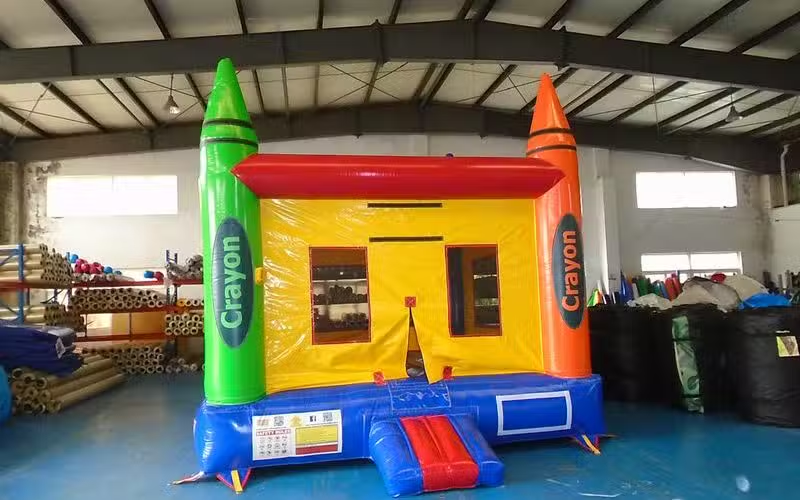
If you have ever hired or operated a jumping castle for an Adelaide backyard party, you know the constant hum of the air blower is the essential soundtrack to the celebration. However, as the hours pass, many parents and event organisers find themselves asking: “Does it really need to run the entire time? Can’t we just pump it up like a giant balloon and unplug it?”
The short answer is yes, it must remain powered on for the duration of use. But to understand the importance of this, we need to look at the engineering, safety protocols, and operational reality of modern inflatables.
1. The Design: “Constant Air” vs. “Sealed Air”
The most important distinction to understand is that jumping castles are Constant Air structures. This is fundamentally different from a pool float, a camping mattress, or a car tyre, which are “Sealed Air” products.
- Intentional Leakage: A jumping castle is constructed from heavy-duty PVC or nylon panels stitched together at thousands of points. These seams are not airtight. In fact, they are designed to let air escape.
- The Pressure Valve Effect: When children jump, they exert massive, sudden pressure on the internal air. If the unit were perfectly sealed, the pressure would have nowhere to go, causing the seams to burst.
- The Blower’s Role: Because air is constantly “breathing” out of the seams, the blower acts as a continuous pump, replacing the lost air in real-time.
2. Structural Integrity: Preventing the “Collapse Risk”
The safety of the children inside depends entirely on the structural tension of the castle walls and floor.
- The Rapid Deflation Hazard: The moment the blower is turned off, the internal pressure drops. Because the material (often commercial-grade 0.55mm PVC) is incredibly heavy, gravity takes over quickly.
- Entrapment Prevention: A collapsing castle can trap children under layers of heavy fabric. High-quality builds, such as those from East Inflatables, use baffled chambers to slow down deflation slightly in an emergency, but they still require active power to stay upright and rigid.
- Impact Protection: If the pressure isn’t high enough, a jumping child can “bottom out,” hitting the hard ground underneath, which is a leading cause of injuries.
3. Practical Considerations: Ground Surface and Noise
Where and how you set up the blower and the castle can affect performance and safety.
- Surface Matters: The blower should always be placed on a level, dry surface. If placed on dry grass or loose dirt (common in many South Australian gardens), the intake can suck in debris, which reduces the air pressure inside the castle and can damage the motor.
- Ground Protection: Ensure the area is clear of sharp sticks or stones before laying down the groundsheet. If you are setting up on a hard surface like a driveway, use extra padding to protect the base of the inflatable.
- Noise Management: To reduce the hum of the blower, ensure it is stable. Professional-grade blowers supplied by reputable manufacturers like East Inflatables are balanced to minimise mechanical noise.
Frequently Asked Questions (FAQ)
Q: Can I place the blower on the grass? A: Yes, but ensure the grass is short. If the grass is long, it can be sucked against the blower’s air intake. A small board or a rubber mat under the blower is a great Adelaide “pro-tip” to keep it clear of dust and debris.
Q: Is it safe to leave the blower on if it starts to sprinkle with rain? A: In light showers, keep the blower running to maintain internal pressure. However, South Australian weather can change quickly. If the rain becomes heavy, evacuate immediately, turn off the power, and move the blower to a dry area.
Q: Why does my blower feel hot to the touch? A: It is normal for the motor to feel warm. Ensure the air intake is not blocked by a plastic bag or dry grass. Clear airflow is essential for the motor to cool itself down, especially during a hot Adelaide summer.
Q: How do I know if the blower is powerful enough for my castle? A: Each inflatable has a specific requirement. Equipment from East Inflatables is always matched with high-performance blowers to ensure the structure meets Australian safety standards.
Q: What should I do if the power trips during the party? A: Station an adult at the entrance to help children out immediately. Once empty, check your fuse box or RCD. Do not allow children back in until the unit is fully re-inflated and rigid.
Conclusion
The blower is the “life support system” of your jumping castle. From maintaining the right pressure to protecting the motor from ground debris, every detail counts. By investing in reliable equipment from industry leaders like East Inflatables, you are ensuring that the blower and castle work in perfect harmony for a safe, worry-free event.