
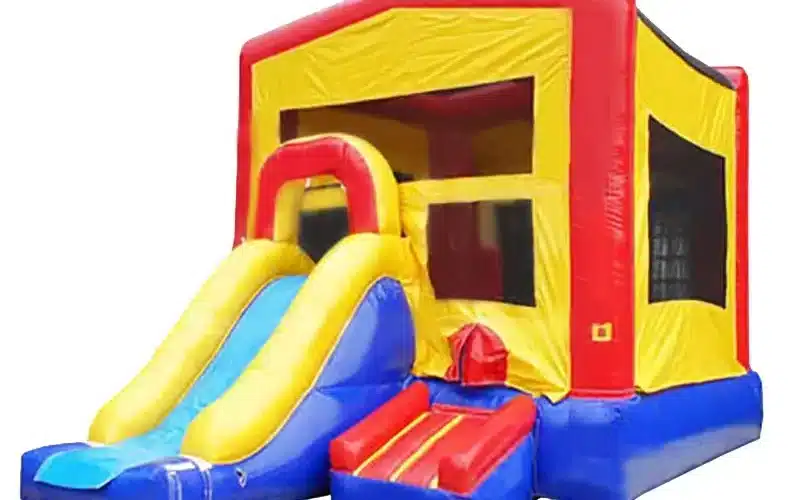
As artificial grass becomes an increasingly popular choice for Australian backyards due to its low maintenance and evergreen look, many inflatable rental operators and parents face a common question: Is it safe to set up a jumping castle on synthetic turf?
The short answer is yes, but the installation process is significantly different from setting up on natural grass. Professional operators must consider technical challenges, specific safety requirements such as AS 3533.4.1, and the protection of both the inflatable and the synthetic turf during an event.
The Challenges of Synthetic Turf
Unlike natural soil, artificial grass is a multi-layered system typically consisting of a drainage base, a backing layer, synthetic fibers, and infill, such as sand or rubber granules.
The primary challenge lies in anchoring. On natural grass, you can easily drive 380mm steel stakes into the earth. On artificial turf, driving a stake means puncturing the weed barrier and backing material, which can cause permanent damage to the lawn’s drainage and structural integrity.
Anchoring Strategies: To Stake or Not to Stake?
When it comes to securing a jumping castle on artificial grass, there are generally two professional options:
A. Weight-Based Ballast
If the homeowner does not want their turf punctured, you must treat the setup as a hard surface installation. According to Australian safety standards, each anchor point must be able to withstand a specific amount of force. For most standard castles, this equates to roughly 160kg of weight per anchor point. This requires a significant amount of sandbags or weights to ensure the unit remains stable in windy conditions.
B. Precision Staking
If the owner allows staking, you must use a specialized technique. Use thin, high-strength steel stakes rather than thick rebar. Carefully part the synthetic blades before driving the stake through the backing. Once the stake is removed, the hole in the backing is usually small enough to be self-healing, and the fibers can be brushed back into place to hide the entry point.
Preventing Heat Damage and Friction
Artificial grass can become significantly hotter than natural grass in the Australian sun. This presents two specific risks:
- Material Softening: High surface temperatures can affect the 0.55mm PVC material of the jumping castle over long periods.
- Friction Burns: As children jump, the castle moves slightly. The synthetic fibers of the turf are abrasive. Without a buffer, the friction between the moving castle and the turf can cause wear on the inflatable’s base or melt the synthetic fibers of the lawn.
The Professional Solution: Always use a heavy-duty groundsheet or tarp. This acts as a friction-reducing layer, protecting the reinforced seams of the inflatable and the aesthetics of the lawn.
Managing the Infill Issue
Most artificial lawns use sand or rubber infill to keep the blades standing upright.
- The Suction Problem: The powerful blowers used for jumping castles can create a vacuum effect or blow air around the base, displacing the infill.
- Static Electricity: Synthetic turf is prone to static buildup. When combined with a moving PVC inflatable, this can lead to minor static shocks for the children. Ensuring the groundsheet is properly placed can mitigate this.
Impact Protection and Safety Zones
Safety standards like AS 3533.4.1 are very specific about impact attenuation. While artificial grass often has a shock pad layer underneath, it is rarely sufficient to meet the fall-height requirements for a commercial inflatable.
- Impact Mats: You must place high-density safety mats at the entry and exit points, extending at least 1.2m to 1.5m out.
- Level Ground: Ensure the turf is level. Any significant dips in the sub-base of the artificial lawn can cause the castle to lean, putting uneven stress on the anchor points.
Post-Installation Care
After the event, the weight of a jumping castle will have flattened the synthetic blades.
- Brushing: Use a power brush or a stiff plastic broom to fluff the fibers back up.
- Infill Leveling: Check if any sand infill has been displaced and redistribute it evenly.
Summary Checklist for Artificial Grass Setup
- Consent: Confirm if the client allows staking or requires sandbags.
- Protection: Lay down a high-quality groundsheet to ensure PVC longevity.
- Weight: If using weights, ensure you have a minimum of 160kg per point.
- Mats: Place safety mats on the designated landing zones.
- Wind: Monitor wind speeds strictly, as synthetic turf setups can be more prone to sliding.
Conclusion
Setting up a jumping castle on artificial grass is perfectly safe and achievable, provided you respect the limitations of the surface. By using professional ground protection and adhering to the weight requirements of AS 3533.4.1, you can provide a high-quality experience without damaging the premium landscaping.