
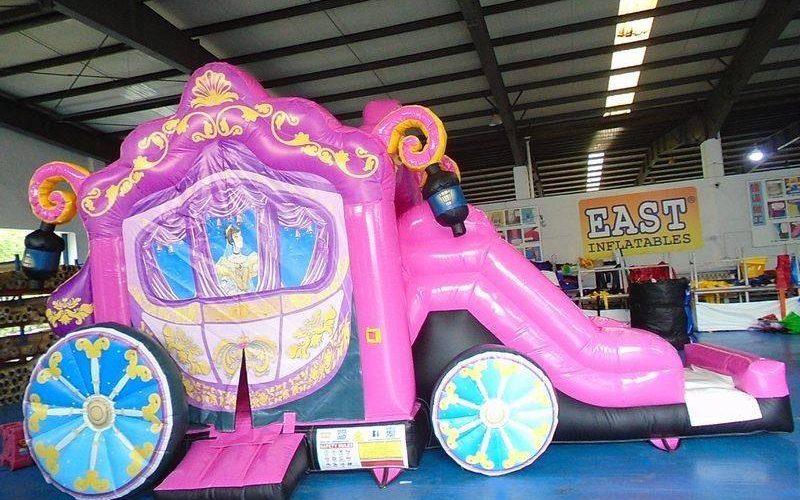
If you own or regularly use commercial inflatables, you may have noticed something that worries many first-time buyers and operators:
Air constantly escaping from the seams.
At first glance, this can make it seem like the inflatable has a leak or manufacturing problem. However, in many cases, a small amount of air release from seams is actually completely normal.
So how can you tell the difference between normal airflow and a real air leak?
Here’s what inflatable operators and rental businesses should know.
Why Inflatables Continuously Release Air
Most commercial inflatables — including jumping castles, inflatable slides, obstacle courses, and interactive games — are designed as:
- Constant-air inflatables
This means the inflatable relies on a blower running continuously during operation.
Experienced commercial inflatable manufacturers such as East Inflatables often explain that constant-air inflatables are intentionally designed to release small amounts of air through seams during normal operation.
The blower constantly pushes air into the inflatable while a small amount of air naturally escapes through:
- Stitching holes
- Seams
- Fabric joins
- Pressure points
This airflow helps maintain stable internal pressure while the inflatable is in use.
Without controlled air release, the inflatable could become overly rigid or unstable during bouncing and movement.
Seam Airflow Is Usually Normal
It is completely normal to feel small amounts of air escaping around:
- Seams
- Mesh stitching
- Slide joints
- Entrance areas
In fact, many commercial inflatables are intentionally designed this way.
You may especially notice airflow:
- Near heavily stitched areas
- Around reinforced corners
- On larger inflatable slides
- During hot weather when internal pressure changes
As long as the inflatable remains fully inflated and stable, light seam airflow is usually not considered a defect.
When Air Loss May Indicate a Problem
While minor seam airflow is normal, excessive air loss can sometimes indicate:
- Damaged stitching
- Torn seams
- PVC separation
- Small punctures
- Worn high-pressure areas
- Blower performance issues
Signs of a possible problem include:
- Soft or sagging walls
- Loss of shape
- Reduced bounce performance
- Sections collapsing
- The blower struggling to maintain pressure
- Visible seam separation
If the inflatable no longer maintains proper firmness during operation, further inspection may be needed.
Large Inflatables Often Release More Air
Many people are surprised that larger inflatables may appear to “leak” more air than smaller units.
This is often because large commercial inflatables contain:
- More stitching
- More reinforced panels
- More stress points
- Larger bounce surfaces
Obstacle courses and large inflatable slides commonly release noticeable airflow around seams while still operating normally.
This is especially true during busy events with constant user movement.
Temperature and Weather Can Affect Air Pressure
Brisbane and other warm-weather locations can experience significant temperature changes during outdoor events.
Heat can affect:
- Internal air pressure
- PVC flexibility
- Blower efficiency
- Seam expansion
During cooler mornings, an inflatable may feel softer until temperatures rise.
During very hot afternoons, pressure changes may make seam airflow more noticeable.
Humidity and rain can also slightly affect inflatable firmness.
The Difference Between a Leak and Normal Venting
A simple way to understand the difference is:
Normal Venting
- Small airflow from seams
- Inflatable remains firm
- Shape stays stable
- No rapid deflation
- Blower operates normally
Possible Leak
- Large air escape from one area
- Visible hissing
- Soft walls
- Deflation over time
- Inflatable losing structure
- Difficulty staying inflated
A properly functioning inflatable should maintain its overall shape even with small amounts of seam airflow.
How Operators Usually Check for Leaks
Professional inflatable operators often inspect inflatables by checking:
- Seam condition
- Pressure consistency
- Blower airflow
- PVC surface wear
- High-stress areas
- Anchor point stability
For suspected leaks, operators may use:
- Soap spray tests
- Close listening for air hissing
- Section-by-section inspection
- Temporary patch isolation
Small punctures are often much easier to repair than damaged seams or structural separation.
Why Older Inflatables May Leak More Air
Over time, commercial inflatables naturally experience wear from:
- UV exposure
- Frequent folding
- Transportation
- Heavy user traffic
- Moisture and humidity
- Friction at stress points
Older inflatables may gradually develop:
- Looser stitching
- Material fatigue
- Seam stretching
- Minor pinhole leaks
Routine inspection and maintenance become more important as inflatables age.
Proper Blower Size Matters Too
Sometimes what appears to be a leak is actually caused by insufficient airflow from the blower.
Possible causes include:
- Incorrect blower size
- Dirty blower intake
- Weak motor performance
- Long extension cables reducing power
- Overheated blowers
Commercial inflatables rely heavily on stable continuous airflow to maintain proper pressure.
Should You Be Concerned About Seam Airflow?
In most cases, no.
A small amount of consistent air release from inflatable seams is completely normal for commercial constant-air inflatables.
The key thing to monitor is not whether air is escaping, but whether the inflatable:
- Maintains proper shape
- Feels stable during use
- Remains fully inflated
- Operates safely under normal conditions
If the inflatable stays firm and performs normally, light seam airflow alone is usually not a sign of a dangerous leak.
Final Thoughts
Many first-time inflatable owners assume that any escaping air means there is a leak, but commercial inflatables are designed to release small amounts of air during operation.
Normal seam airflow helps maintain balanced internal pressure while the blower continuously supplies fresh air into the inflatable.
However, excessive air loss, sagging walls, collapsing sections, or visible seam damage should never be ignored.
Routine inspections, proper blower maintenance, and regular seam checks can help commercial inflatables remain safer, firmer, and more reliable over time.